
Sleep quality improves when you control six things: light exposure, bedroom temperature, timing consistency, your wind-down routine, what you consume in the evening, and your sleep environment. None of them requires a gadget or a prescription. Most people who “sleep badly” are not broken — they are running two or three of these levers against themselves every single night, then trying to compensate with willpower at 11pm.
This guide explains what sleep quality actually is, walks through each of the six levers with the research behind it, and ends with a realistic evening routine you can start tonight.
What sleep quality actually means
Sleep quality is how well your sleep does its job — cycling through light sleep, deep (slow-wave) sleep and REM sleep in complete, uninterrupted cycles — not simply how many hours you spend in bed.
A night of sleep is a sequence of roughly 90-minute cycles. Early in the night, cycles are dominated by deep slow-wave sleep, when the body does most of its physical repair: growth hormone release peaks, tissue recovery accelerates, and the brain’s glymphatic system clears metabolic waste. Later cycles shift toward REM sleep, which supports memory consolidation and emotional processing.
This is why quality beats raw duration. Eight fragmented hours can leave you feeling worse than seven consolidated ones, because fragmentation cuts cycles short before the restorative stages complete. It’s also why the goal of everything below is the same: protect complete cycles.
Two terms worth knowing before we go further:
Circadian rhythm — your internal ~24-hour clock, set primarily by light exposure, which decides when your body wants to be asleep.
Sleep pressure — the steadily building biological drive to sleep, produced by adenosine accumulating in the brain across your waking hours. Caffeine works by blocking adenosine receptors; it doesn’t remove the pressure, it hides it.
Good sleep happens when high sleep pressure meets the right phase of your circadian rhythm. Every lever below serves one of those two masters.
The six levers of sleep quality
1. Light — the master signal
Light is the single strongest input to your circadian clock. Bright light in the morning anchors the rhythm; bright light at night delays it, pushing your biological bedtime later even while your alarm stays fixed.
The practical version: get outside light within the first hour of waking — even a few minutes on an overcast Northern European morning delivers far more circadian-relevant light than indoor lighting. In the evening, dim your environment during the last two hours before bed. Screens matter less for their blue light than for their brightness and their content; a dim screen showing something calm is a far smaller problem than a bright one showing something activating. If evening screens are non-negotiable, at minimum drop the brightness and enable night mode. Our guide to building a digital sunset routine covers a realistic version of this that doesn’t require abandoning your phone.
2. Temperature — the underrated lever
Your core body temperature naturally drops as you fall asleep, and sleep deepens when the environment helps that drop happen. Research on sleep environments consistently points to a cool bedroom — roughly 16–19°C for most people — as supporting deeper slow-wave sleep. We break down the specifics, including the counterintuitive role of warm baths before bed (they cool you down afterwards), in the best bedroom temperature for deep sleep.
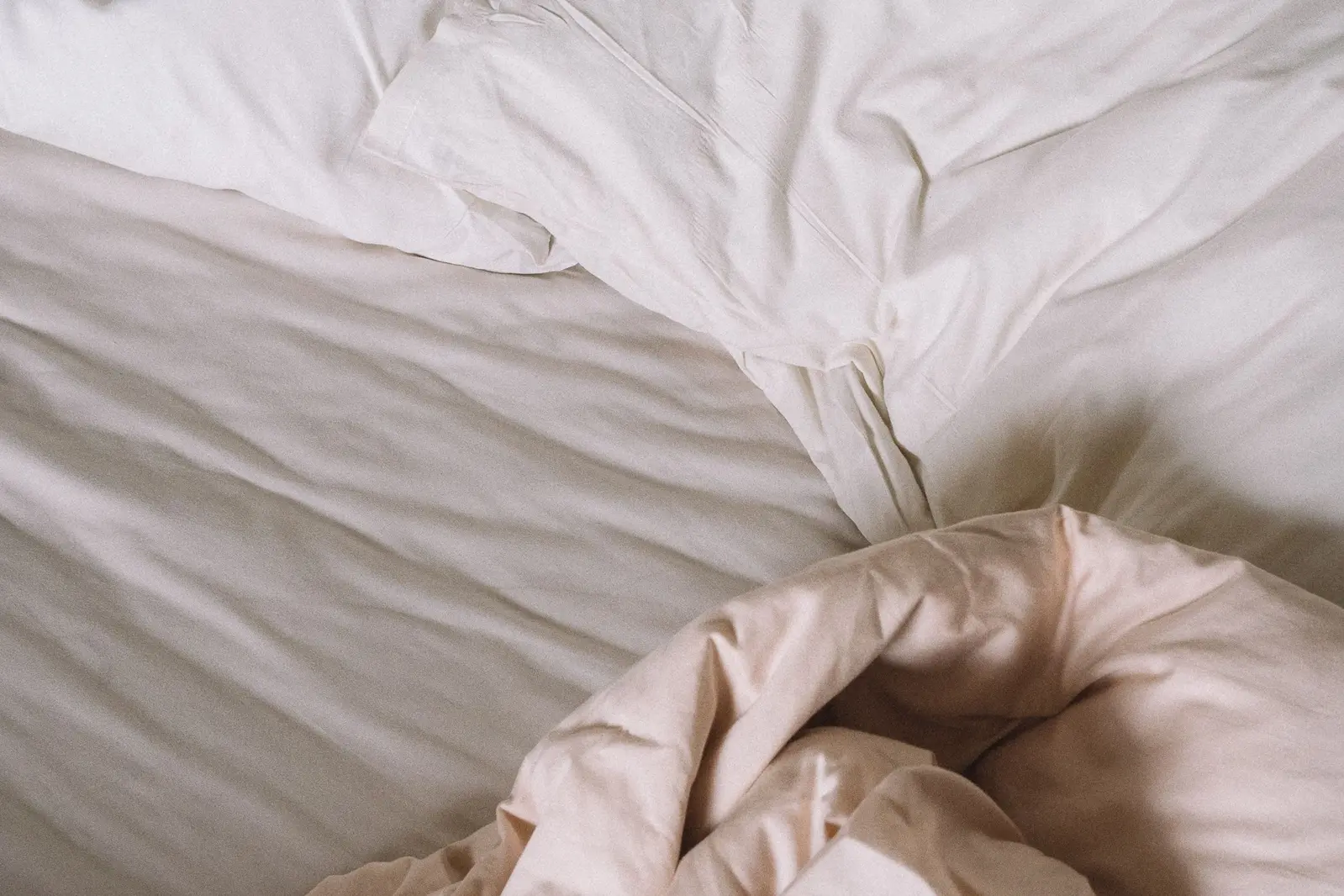
The couples’ version of the temperature problem — one person sleeps hot, the other cold — has its own elegant fix in the Scandinavian sleep method: separate duvets, shared bed, zero nightly thermostat negotiations.
3. Timing — consistency beats duration
Going to bed and waking at roughly the same times every day — including weekends — is the least glamorous and most effective sleep intervention in the research literature. Irregular sleep timing produces a state researchers call social jetlag: your body is permanently a time zone or two away from your schedule.
You do not need perfection. A consistent wake time within a ±30-minute window, held even after a late night, does most of the work, because a stable wake time anchors your light exposure and rebuilds sleep pressure on schedule. Structured approaches like the 10-3-2-1-0 rule can help make timing automatic rather than a nightly decision.
4. Wind-down — the descent, not the switch
Sleep is not a switch you flip; it’s a descent your nervous system needs runway for. A wind-down routine is simply a repeated sequence of low-stimulation activities in the last 30–60 minutes that signals, reliably, that the day is over. Repetition is the active ingredient — the routine works because it’s the same, not because any single element is magic.
We’ve built a realistic 30-minute evening wind-down template around three phases: close the day (a two-minute note of tomorrow’s top task, so your brain stops rehearsing it), lower the lights and stimulation, and finish with something physically settling — reading, stretching, breathwork. If evening is when your worries get loud, why stress peaks at night explains the physiology and what actually helps.
5. Substances — timing more than abstinence
Caffeine has a half-life of five to six hours: a 15:00 double espresso still has meaningful adenosine-blocking activity at bedtime, quietly shaving your deep sleep even if you fall asleep fine. A practical cutoff is 8–10 hours before bed.
Alcohol is the more misunderstood one: it is sedating, so it shortens time to fall asleep — and then fragments the second half of the night, suppressing REM and increasing awakenings. If you’ve ever slept “a full night” after wine and woken exhausted, how alcohol affects your sleep stages explains exactly what happened.
On the supplement side, magnesium is the one with genuine — though modest and form-dependent — evidence. The differences between glycinate, citrate and topical forms matter more than the marketing suggests; we cover what research actually shows in magnesium for sleep.
6. Environment — dark, quiet, boring
The ideal sleep environment is genuinely dull: dark enough that you can’t see your hand, quiet or masked by steady sound, cool per lever two, and reserved for sleep so your brain doesn’t associate the bed with wakefulness. Blackout solutions matter more in Northern European summers than most sleep advice (written for other latitudes) acknowledges — at 3:30am in June, your bedroom may already be receiving dawn light, which is one common answer to the question we get most: why you wake at 3am and how to stop it.
A realistic evening routine (the 60-minute version)
- T-minus 60: Kitchen closed, lights dimmed, tomorrow’s top task written down.
- T-minus 45: Screens dim or done. Shower or warm bath if it suits you.
- T-minus 30: Low-stimulation activity — paper book, gentle stretching, quiet conversation.
- T-minus 10: Bedroom cool and dark. If your mind is racing, a slow breathing pattern (longer exhales than inhales) for two minutes.
- In bed: If you’re not asleep within ~20 minutes, get up, keep lights low, do something boring, return when drowsy. The bed stays associated with sleep, not with trying.
And if you wake in the night, don’t check the clock — the arithmetic (“only four hours left”) is pure activation. How to fall back asleep in under 10 minutes covers the full protocol.
Prefer to measure progress? You don’t need a wearable — low-tech sleep tracking methods work surprisingly well, and one trend worth an honest look before you try it is mouth taping, where the evidence is thinner than the hype.
Frequently asked questions
How long does it take to improve sleep quality? Most people notice a difference within one to two weeks of consistent changes, particularly from fixing light exposure and wake-time consistency. Deeper improvements — feeling genuinely restored on waking — typically consolidate over three to four weeks as your circadian rhythm stabilizes around the new pattern.
Is 6 hours of good sleep better than 8 hours of bad sleep? Neither is ideal, but consolidated sleep generally outperforms fragmented sleep of longer duration, because unbroken cycles protect deep and REM stages. That said, most adults genuinely need 7–9 hours; six consolidated hours is a better bad night, not a sustainable target.
Why do I sleep worse as I get older? Deep slow-wave sleep naturally declines with age, and the circadian rhythm often shifts earlier and flattens, making sleep lighter and more fragmented. The six levers still work — older sleepers often benefit most from morning light, consistent timing and a cooler bedroom.
Do naps ruin night sleep? Short naps — 20 minutes or less, before mid-afternoon — rarely harm night sleep and can aid recovery. Long or late naps drain the sleep pressure you need at bedtime. If you struggle to fall asleep at night, naps are the first thing to audit.
What’s the fastest single change I can make tonight? Fix your wake time and get outside light within an hour of it. It feels unrelated to tonight’s sleep, but a stable, light-anchored wake time is the anchor from which every other improvement follows.
When should I see a doctor about my sleep? If you snore loudly with pauses in breathing, experience excessive daytime sleepiness despite adequate time in bed, or have struggled with insomnia for more than three months, speak with a healthcare provider. These can indicate sleep apnea or chronic insomnia, both of which have effective treatments.
This article is for informational purposes and is not medical advice. Consult a qualified healthcare provider before changing your health routine, especially if you have a medical condition, are pregnant, or take medication.
Guides on sleep & overnight recovery
-
The Best Bedroom Temperature for Deep Sleep (It’s Colder Than You Think)
Research points to 16–19°C as the ideal sleep temperature — cooler than most bedrooms run. Why the body needs to cool down…
-
The 10-3-2-1-0 Sleep Rule: What the Evidence Actually Supports
The 10-3-2-1-0 sleep formula, graded honestly: caffeine and alcohol timing are strongly supported, work and screen boundaries are more nuanced, and the…
-
How to Track Sleep Without a Wearable (and Why You May Not Be Missing Much)
Three low-tech signals — a morning alertness rating, sleep-window logging, and a weekly review — track sleep as well as most wearables,…
-

How Alcohol Actually Affects Your Sleep Stages
Alcohol is a sedative, not a sleep aid: it speeds sleep onset then fragments and hollows out the second half of the…
-

The Digital Sunset: A Screen Wind-Down That Doesn’t Require Willpower You Don’t Have
A staged, three-hour screen wind-down — content curfew, dimmer hardware, phone out of the bedroom — that survives real evenings instead of…
-

How to Fall Back Asleep in Under 10 Minutes
The fastest way back to sleep after a night waking: no clock, no phone, longer exhales, and a boring focus for the…
-

The 30-Minute Evening Wind-Down Routine (That Survives Real Evenings)
A 30-minute, three-phase wind-down routine — close the day, dim the world, settle the body — plus the 5-minute version for evenings…
-
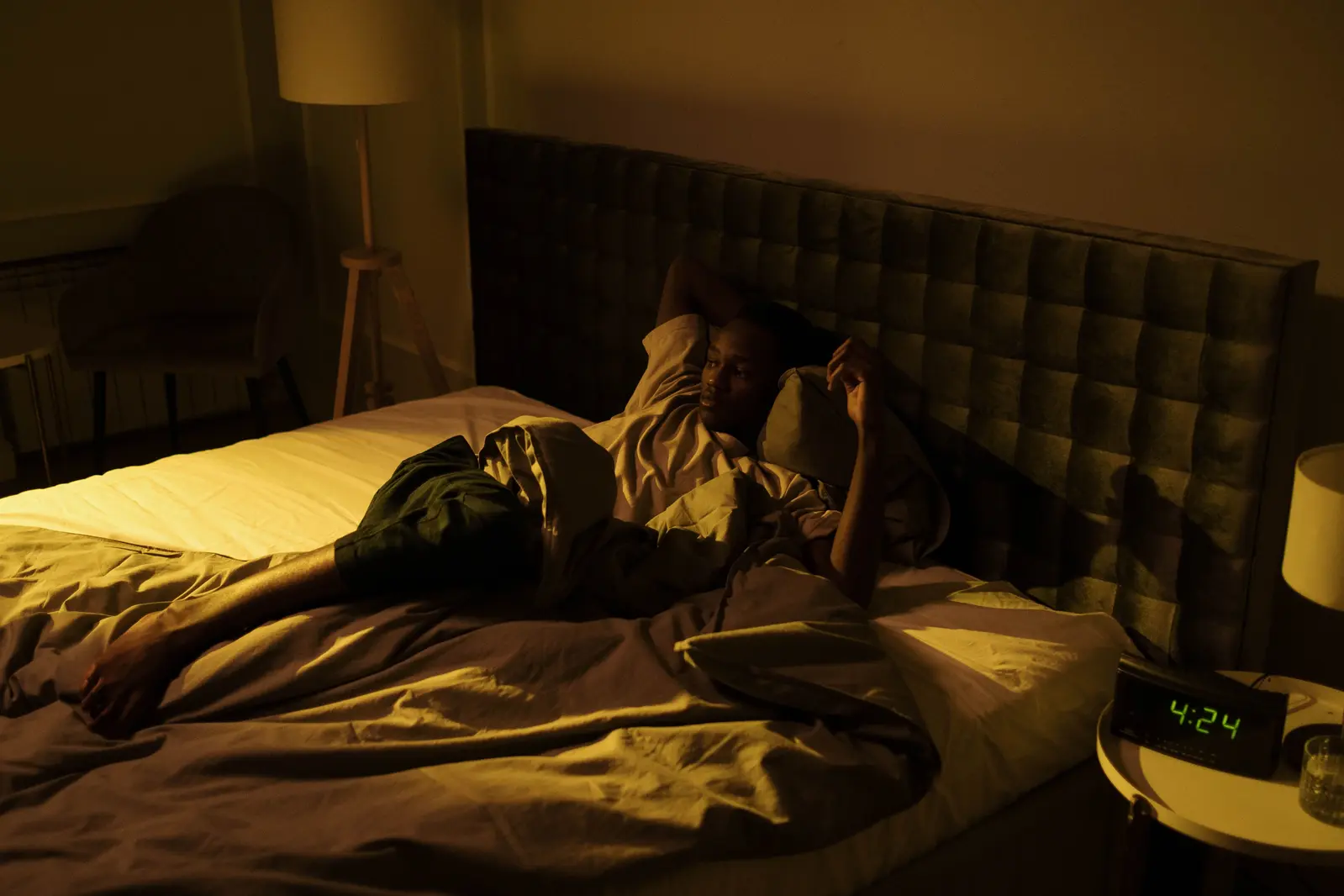
Why You Wake Up at 3am (and How to Stop)
Waking around 3am is usually normal sleep physiology, not a disorder. Here’s why it happens at the same time each night, and…
-
Mouth Taping for Sleep: What the Evidence Actually Says
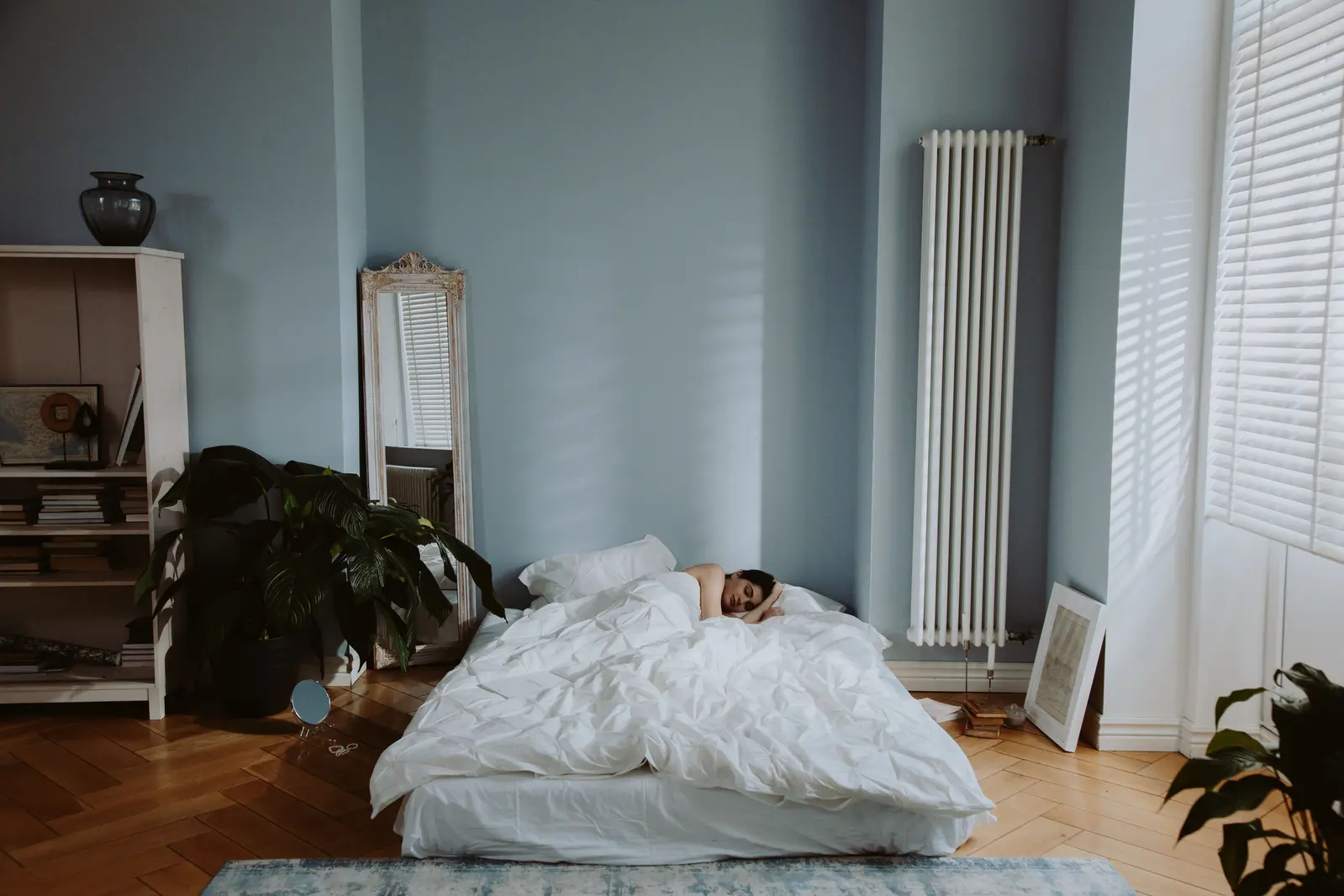
Mouth taping has weak evidence, a real safety risk for snorers, and zero support for the energy and focus claims driving the…
-
The Scandinavian Sleep Method: Two Duvets, One Bed, Zero Blanket Wars
The Scandinavian sleep method: couples share one bed but each sleeps under their own duvet. Standard in Nordic countries, and the mechanism…