
Muscle recovery follows a hierarchy: sleep and nutrition do most of the work, movement and active recovery accelerate it, and tools — rollers, massage balls, baths — sit at the top as useful accelerants, not foundations. Most recovery advice gets this exactly backwards, leading people to buy their way up the pyramid while the base stays broken.
This guide explains what actually happens in your muscles after training, why day two often hurts more than day one, and how to order your recovery efforts so the effort goes where the return is.
What happens in muscle tissue after training
Hard training creates microscopic damage in muscle fibers and depletes local energy stores. In response, the body launches a controlled inflammatory process: immune cells clear damaged tissue, satellite cells begin repair, and — given adequate protein and rest — the muscle rebuilds slightly stronger than before. This adaptation cycle is the entire point of training. Recovery isn’t the boring bit between workouts; it’s where the results are manufactured.
DOMS (delayed-onset muscle soreness) is the dull, stiff ache that appears 24–72 hours after unfamiliar or eccentric-heavy exercise, caused by the inflammatory response to fiber microdamage — not, as gym folklore holds, by lactic acid, which clears within an hour of training.
The delayed timing is why day two hurts more than day one: the inflammatory response builds over 24–48 hours before resolving. DOMS is normal after novel stimulus. Sharp, localized, or one-sided pain is not DOMS — see the warning signs section below.
The recovery hierarchy
Level 1 — Sleep (non-negotiable)
The majority of physical repair happens during deep slow-wave sleep, when growth hormone secretion peaks. Chronically shortened sleep measurably blunts muscle recovery and training adaptation — no tool further up the pyramid compensates for it. Everything in our sleep and overnight recovery guide is, functionally, muscle recovery advice.
Level 2 — Nutrition and hydration
Repair requires raw material. The essentials are unglamorous: adequate daily protein (spread across the day rather than crammed into one shake), enough total energy, and rehydration after sweating. The relationship between minerals and muscle function is frequently oversold, though not empty — magnesium and muscle cramps separates the real physiology from the supplement marketing.
Level 3 — Active recovery
Light movement on rest days — easy cycling, walking, swimming, gentle mobility work — increases blood flow through recovering tissue and consistently outperforms complete rest for reducing soreness in the research. The key word is light: the aim is circulation, not stimulus. If your “recovery ride” needs a recovery ride, it wasn’t one. We’ve laid out concrete options in what to actually do on active recovery days, and a 10-minute morning mobility routine that requires no equipment.
Whether to train through soreness is its own judgment call — should you train with sore muscles? gives the honest decision tree.
Level 4 — Tools and modalities
This is where most recovery marketing lives, so let’s be precise about the evidence:
Self-myofascial release — foam rollers, massage balls and fascia tools show consistent short-term benefits: reduced perceived soreness and temporarily improved range of motion. What they don’t do is accelerate tissue repair itself; they make recovery feel better and movement easier, which has real value. The differences between the tool types are smaller than the price differences — our full comparison covers which suits which body region.
Hot baths and Epsom salts — warm water immersion genuinely aids relaxation and perceived recovery. The magnesium-absorption claim behind Epsom salts specifically is far shakier; a question worth asking gives the honest verdict (short version: take the bath for the bath).
Cold and contrast — cold-water immersion reduces soreness but may blunt strength adaptations if used immediately after resistance training; timing matters. This crosses into our cold and heat therapy pillar, where the protocols live.
Stretching — the research shifted meaningfully over the past two decades: long static stretching before training doesn’t prevent soreness or injury and can transiently reduce power output. What changed in the stretching research explains where stretching still earns its place.
Recovery for people who don’t train like athletes
Two audiences get systematically ignored by recovery content written for 24-year-old athletes.
Desk workers. Eight seated hours create their own recovery problem — shortened hip flexors, a stiff thoracic spine, an unhappy neck — that no post-gym protocol touches. Undoing 8 hours of sitting treats the workday itself as the training stress it mechanically is.
Athletes over 40. Recovery genuinely changes with age: the inflammatory response resolves more slowly, sleep architecture shifts, and connective tissue tolerates sudden load spikes less gracefully. The adjustments are specific and manageable — more recovery days between hard sessions, more attention to sleep, more gradual loading — and covered in recovery after 40.
When soreness is a warning sign
Stop self-treating and consult a professional when pain is sharp rather than dull, strongly one-sided after symmetric training, located in a joint rather than muscle, accompanied by swelling or significant weakness, or when severe soreness comes with dark (cola-colored) urine — the latter can indicate rhabdomyolysis, a medical emergency. DOMS is symmetric, dull, and improves with gentle movement; injuries usually fail at least one of those three tests.
A simple weekly recovery template
- After every session: protein within the day’s normal meals, rehydrate, five minutes of easy movement rather than collapsing straight into a chair.
- Daily: protect sleep first; ten minutes of mobility work at whatever time it actually happens.
- Between hard sessions: at least one lighter day for the same muscle groups; active recovery over total rest.
- Weekly: one genuinely easy day. A warm bath, a walk, early to bed. Recovery you enjoy is recovery that happens.
Frequently asked questions
How long does muscle recovery take? Light sessions may need 24 hours; hard or novel training typically requires 48–72 hours before the same muscles are ready for quality work again. Soreness is a rough guide, not a precise one — performance readiness can lag or lead how you feel.
Does soreness mean the workout worked? No. Soreness mainly signals novelty — new exercises, new ranges, eccentric emphasis — not effectiveness. You can make excellent progress with minimal soreness once adapted to a program, and you can be crippled by DOMS from a novel workout that built very little.
Should I take painkillers for DOMS? Routine use of NSAIDs for ordinary soreness is worth avoiding: some evidence suggests they may interfere with the inflammatory signaling that drives adaptation. For occasional significant discomfort they’re reasonable — but if you need them after every session, the program is the problem.
Is complete rest ever better than active recovery? Yes — after illness, poor sleep, very high life stress, or signs of systemic overreaching, full rest wins. Active recovery assumes you’re recovering from training, not from everything at once.
Do massage guns work better than foam rollers? The evidence for percussion devices largely mirrors self-myofascial release generally: short-term soreness reduction and mobility improvement, without accelerating repair itself. Convenience and preference are legitimate deciding factors; physiological superiority is not established.
Why am I sore in muscles I didn’t train? Usually stabilizers: muscles that worked isometrically to support the movement — the core during heavy carries, forearms during pulling work. It’s normal, and often a sign those stabilizers were undertrained.
This article is for informational purposes and is not medical advice. Consult a qualified healthcare provider before changing your health routine, especially if you have a medical condition, are pregnant, or take medication.
Guides on muscle recovery & mobility
-

The 10-Minute Morning Mobility Routine (No Equipment, No Excuses)
A complete 10-minute mobility routine — spine, hips, thoracic rotation, shoulders, deep squat — designed to undo morning stiffness with no equipment…
-

Desk Worker Recovery: A Realistic Routine for Undoing 8 Hours of Sitting
A three-layer routine for desk workers: 30-second micro-breaks every hour, a daily 10-minute hip and thoracic mobility block, and one longer weekly…
-
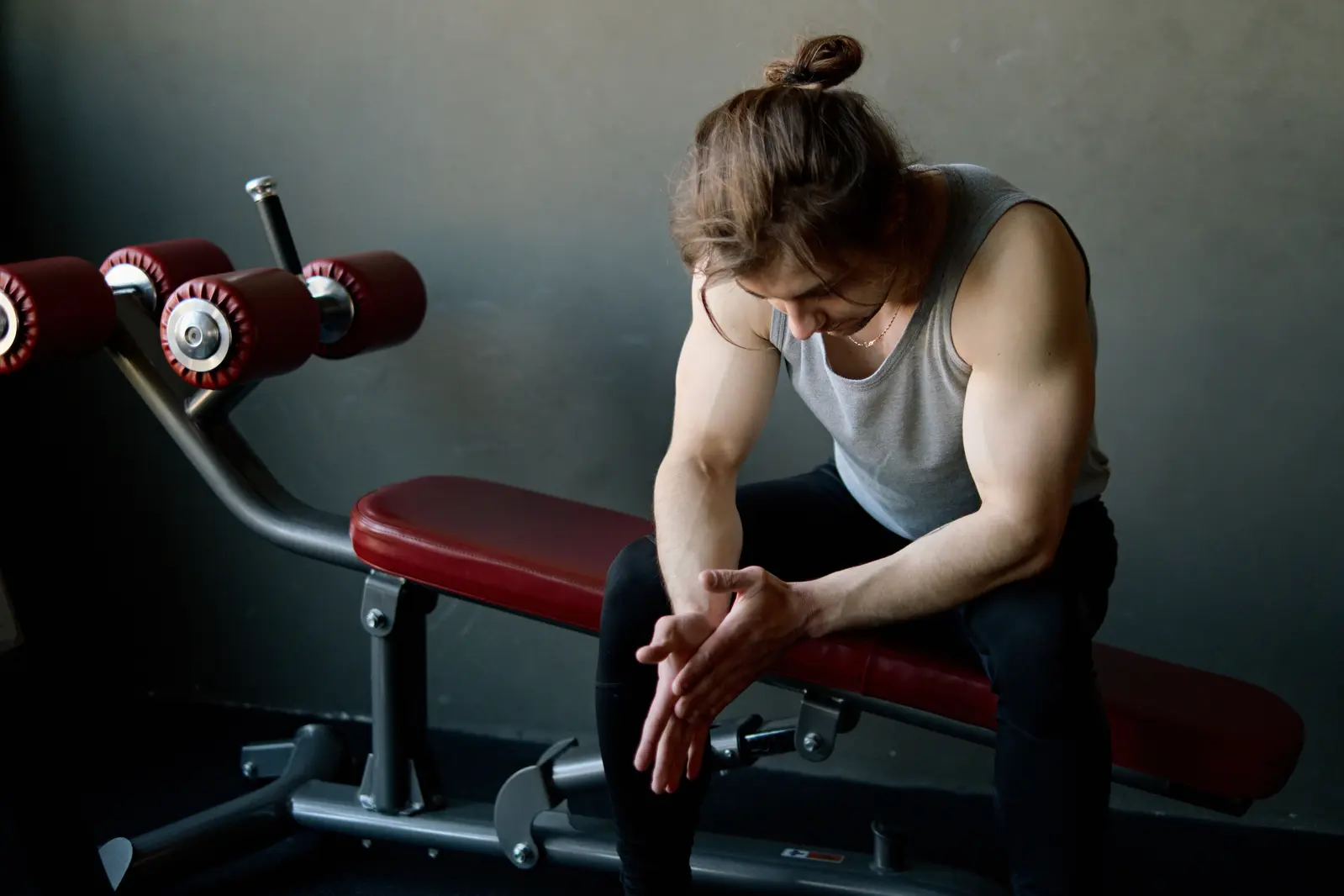
Should You Work Out When Your Muscles Are Sore?
Mild-to-moderate soreness is generally safe to train through; severe soreness that changes how you move is the real signal to rest. A…
-

Should You Stretch Before or After Exercise? What the Research Actually Supports
The evidence favors dynamic stretching before exercise and static stretching after — not either/or, but which kind, when. Plus the honest verdict…
-

What to Do on Active Recovery Days: Three Templates That Actually Recover You
Effective active recovery is low-intensity movement that creates no new fatigue — the talk test is the guide. Three ready-to-use templates: a…
-

Why Muscle Soreness Peaks on Day 2 (and What DOMS Actually Is)
DOMS peaks on day 2 because the pain comes from the inflammatory repair response, not the workout itself — and it’s not…
-
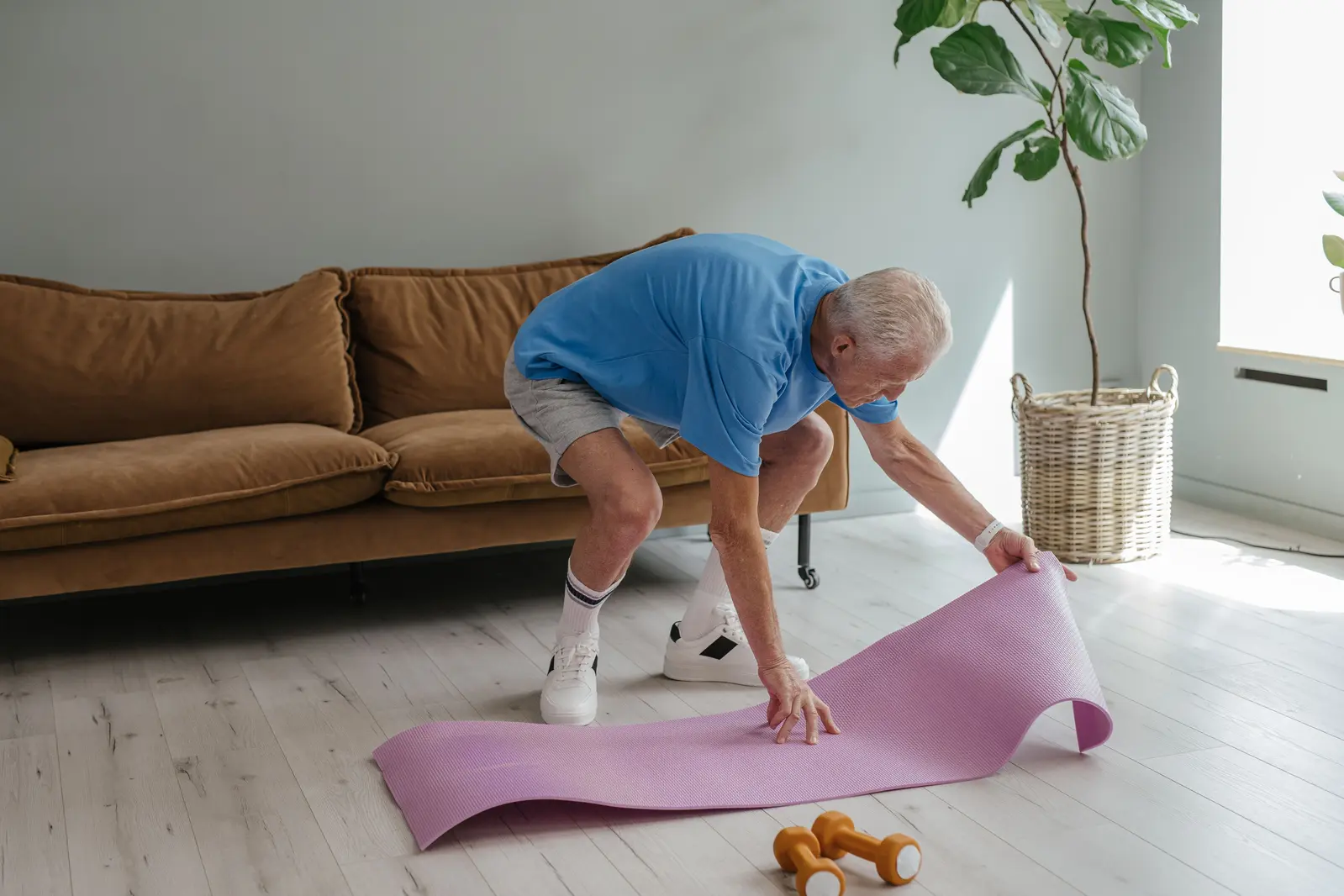
Recovery After 40: What Actually Changes, and What to Do About It
Recovery genuinely slows after 40, but for specific, addressable reasons — not a vague decline. Here’s what actually changes and the concrete…
-

Why You Wake Up at 3am (and How to Stop)
Waking around 3am is usually normal sleep physiology, not a disorder. Here’s why it happens at the same time each night, and…