
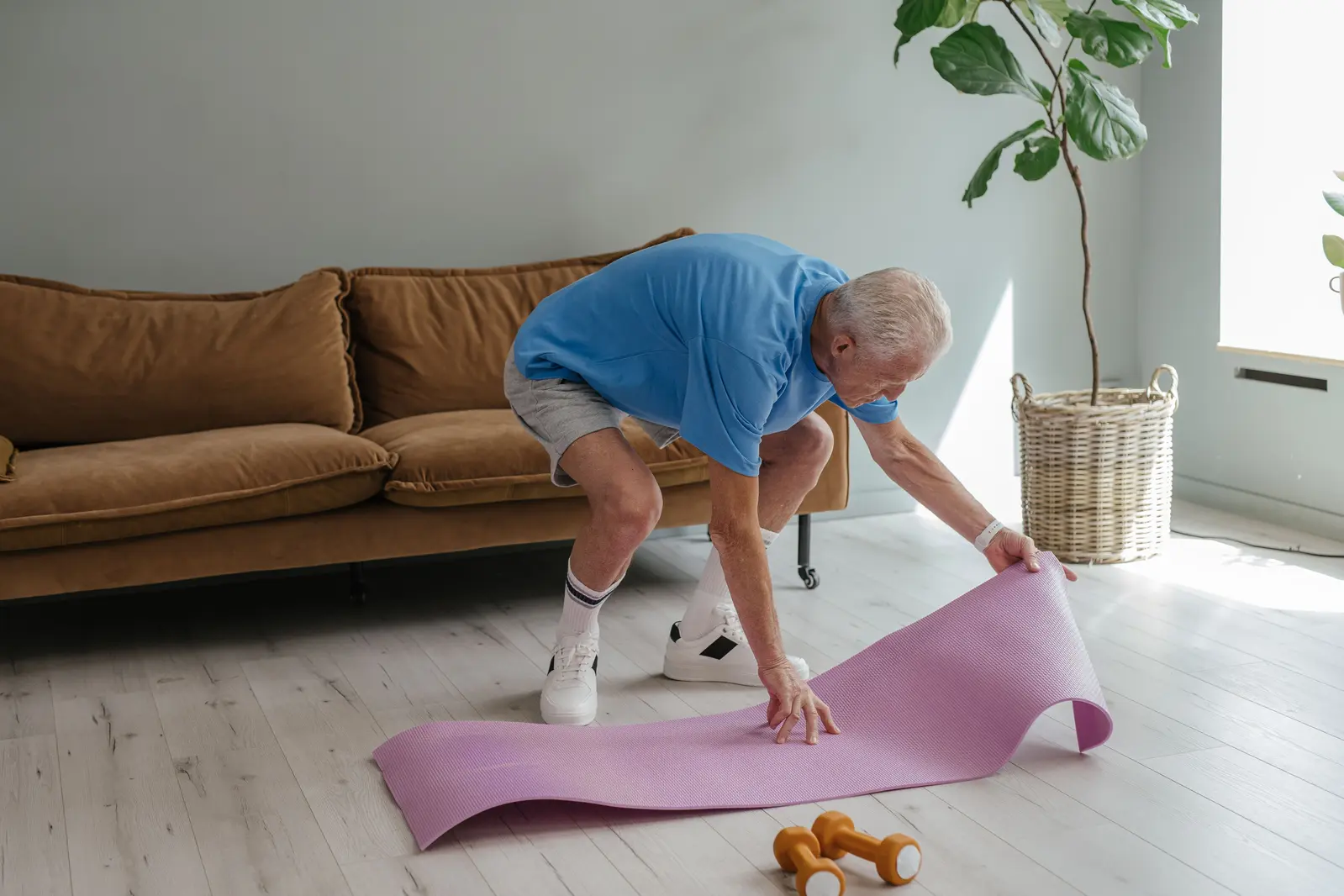
Recovery genuinely does get slower after 40 — but less dramatically than the “it’s all downhill” narrative claims, and for specific, addressable reasons. The main changes: muscle protein rebuilds a little less efficiently, the inflammatory response after hard training resolves more slowly, sleep architecture shifts so deep restorative sleep is harder to come by, and connective tissue tolerates sudden spikes in load less gracefully than it did at 25. None of these means training less matters — it means recovery has to be deliberate rather than assumed. The 25-year-old recovers despite their habits; the 45-year-old recovers because of them.
Here’s what actually shifts with age, and the concrete adjustments that keep you training hard and feeling good.
What genuinely changes (and what doesn’t)
Let’s be precise, because this topic attracts both denial and doom.
Muscle protein synthesis becomes less responsive. With age, muscle rebuilds slightly less efficiently in response to the same protein and training stimulus — a phenomenon researchers call anabolic resistance. It’s real, and it’s the mechanism behind age-related muscle loss (sarcopenia). The crucial nuance: it’s substantially overcome by adequate protein and resistance training. It’s a reason to train and eat more deliberately, not a reason to give up.
Inflammation resolves more slowly. The controlled inflammatory response that drives adaptation after hard training — described in our muscle recovery guide — clears more slowly with age. In practice this shows up as DOMS lasting longer and hard sessions needing more spacing.
Sleep architecture shifts. Deep slow-wave sleep — where most physical repair happens — naturally declines with age, and sleep often becomes lighter and more fragmented. Since sleep is the foundation of the entire recovery hierarchy, this single change ripples through everything else. It’s also the most addressable, which is why it tops the action list below.
Connective tissue gets less forgiving. Tendons and ligaments become somewhat stiffer and slower to adapt, tolerating sudden increases in load less well. This is why so many over-40 injuries are tendon-related (Achilles, patellar, elbow) and why gradual progression stops being optional.
What doesn’t change as much as feared: your capacity to get stronger, fitter and more mobile remains robust well into later decades. Trainability persists; the recovery around the training is what needs managing. People in their 50s, 60s and beyond build real strength and fitness routinely — the ceiling is far higher than the culture assumes.
The adjustments that matter
1. Sleep becomes priority number one
If sleep was the foundation before 40, after 40 it’s the whole game. Declining deep sleep means less overnight repair — so protecting sleep quality directly protects recovery. This is where the entire sleep and overnight recovery guide pays its largest dividend: consistent timing, a cool dark room, morning light, and a real wind-down routine. The good news is that the levers still work; the deep-sleep decline is a tailwind against you, not a wall.
2. Protein, deliberately
To counter anabolic resistance, protein intake matters more and is best distributed across the day rather than concentrated in one meal — several protein-containing meals do more than one large one, because each one has to overcome that reduced responsiveness. Combined with resistance training, this is the evidence-based counter to age-related muscle loss. This isn’t exotic supplementation; it’s ordinary food, planned.
3. More recovery days, not fewer hard days
The instinct to “train harder to fight aging” backfires when recovery can’t keep pace. The better model: keep the hard sessions genuinely hard, but space them more generously and fill the gaps with active recovery rather than more intensity. Where a younger athlete might hammer the same muscles every 48 hours, after 40 that window often wants to be 72. Quality over frequency wins.
4. Warm-ups and progression stop being optional
Stiffer connective tissue means the casual “jump straight in” approach that worked at 25 now courts tendon trouble. A proper warm-up (raising temperature and gradually loading the tissues) and — critically — gradual progression of load and volume are the difference between durable training and a cycle of niggling injuries. The morning mobility routine does double duty here as daily connective-tissue maintenance.
5. Use the tools, honestly
The recovery modalities — massage tools, warm baths, heat and cold from the cold and heat pillar — have the same evidence profile at 45 as at 25: good for perceived recovery and mobility, not magic for tissue repair. But “feels better and moves easier” carries more value when everything’s a bit stiffer and slower, so their role in an over-40 routine is legitimately larger.
6. Manage the whole load, not just training
After 40, training is rarely the only stressor — career, family and general life load compete for the same finite recovery capacity. A hard week at work genuinely reduces what’s left for training recovery, via the shared nervous system and sleep pathways. Recognizing that total load, and easing training when life spikes, is maturity, not weakness.
A realistic over-40 training-week shape
- 2–3 genuinely hard sessions, spaced with 48–72 hours between similar demands.
- Active recovery on most off days — walking, easy cycling, mobility — over complete rest.
- Daily: protein across meals, ten minutes of mobility, and sleep protected like the priority it now is.
- Weekly: one deliberately easy day; a warm bath and an early night count as training infrastructure, not indulgence.
- Every 4–6 weeks: a lighter “deload” week. Younger athletes can skip these and get away with it; after 40 they’re where the adaptation consolidates and the injuries don’t happen.
Frequently asked questions
Does muscle recovery really slow down after 40?
Yes, modestly and for specific reasons — slower inflammation resolution, less responsive muscle protein synthesis, and declining deep sleep. But the slowdown is gradual, not a cliff at any birthday, and it’s substantially offset by deliberate sleep, protein and progression. Many masters athletes out-recover careless 25-year-olds.
Should I train less as I get older?
Not necessarily less — often just differently. Keep hard sessions hard but space them more, add recovery days and deload weeks, and progress load gradually. Reducing training entirely tends to accelerate the muscle and fitness loss you’re trying to avoid.
Why do I get injured more easily now?
Connective tissue stiffens and adapts more slowly with age, tolerating sudden load spikes poorly — which is why tendon injuries rise after 40. Consistent warm-ups and gradual progression are the main protection; the casual approach that worked in your 20s is the usual culprit.
Do I need more protein after 40?
Getting adequate protein becomes more important due to reduced muscle-building responsiveness, and distributing it across several meals helps more than concentrating it. This, paired with resistance training, is the core defense against age-related muscle loss. It’s a food-planning task, not a supplement one.
Is it too late to start training in my 40s or 50s?
No. Trainability — the capacity to get stronger, fitter and more mobile — persists well into later life. Starting later simply means respecting the recovery adjustments in this article from day one: gradual progression, real warm-ups, and protected sleep.
Keep reading: the full recovery hierarchy these adjustments build on is in our muscle recovery and mobility guide; the sleep changes that matter most after 40 are covered in the sleep and overnight recovery guide; and to fit it all into a sustainable week, see daily recovery routines.
This article is for informational purposes and is not medical advice. Consult a qualified healthcare provider before starting or changing an exercise program, especially if you have a medical condition or have been inactive.